Horse Slaughter in the United States
Although there are no currently operating horse slaughterhouses in the United States, thousands of American horses are still transported across the borders to Canada and Mexico each year to be slaughtered for human consumption. While draft horses represent the smallest percentage of the U.S. horse population, they are grossly over represented in the number of horses being shipped to slaughter every year.
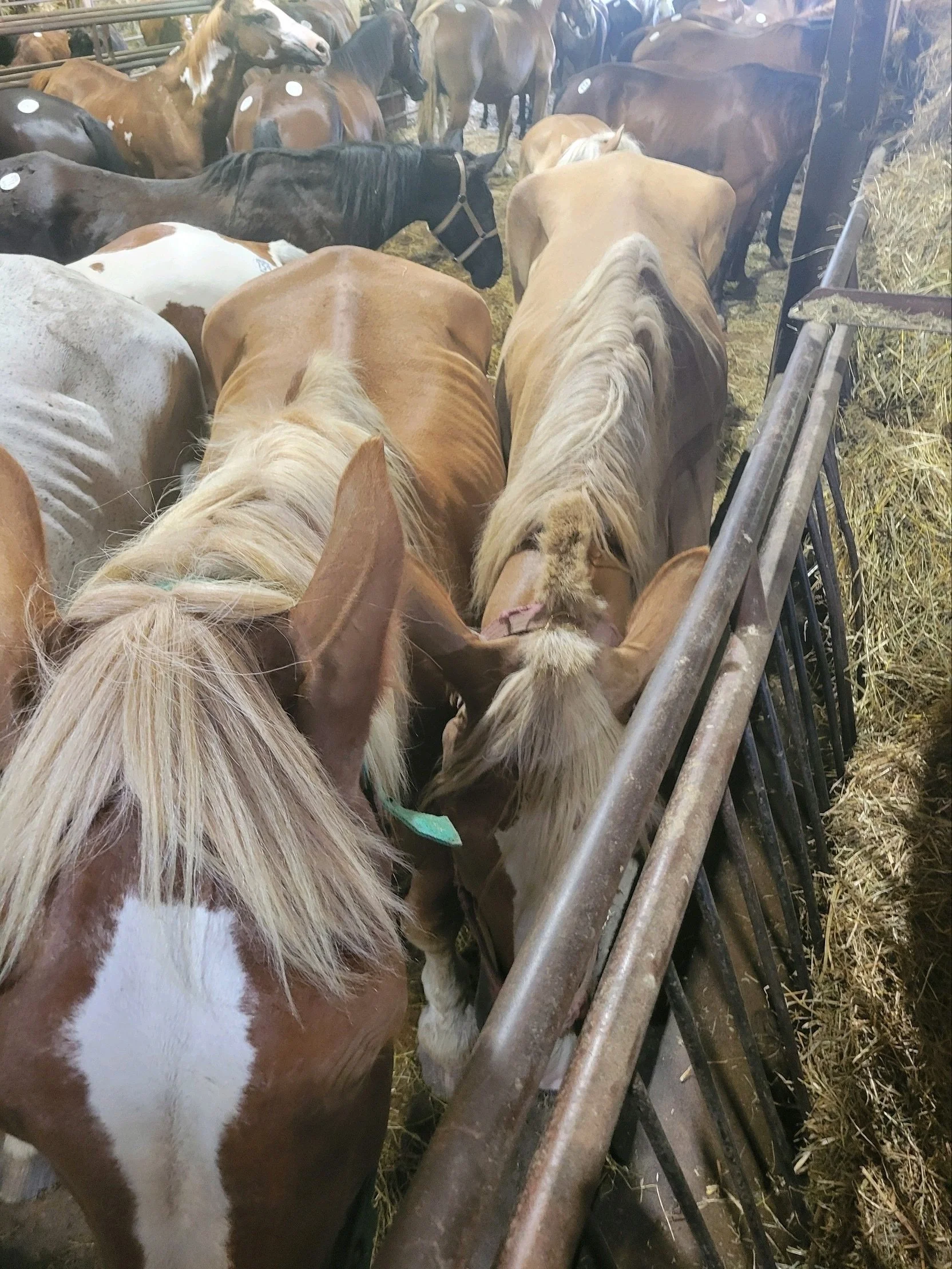
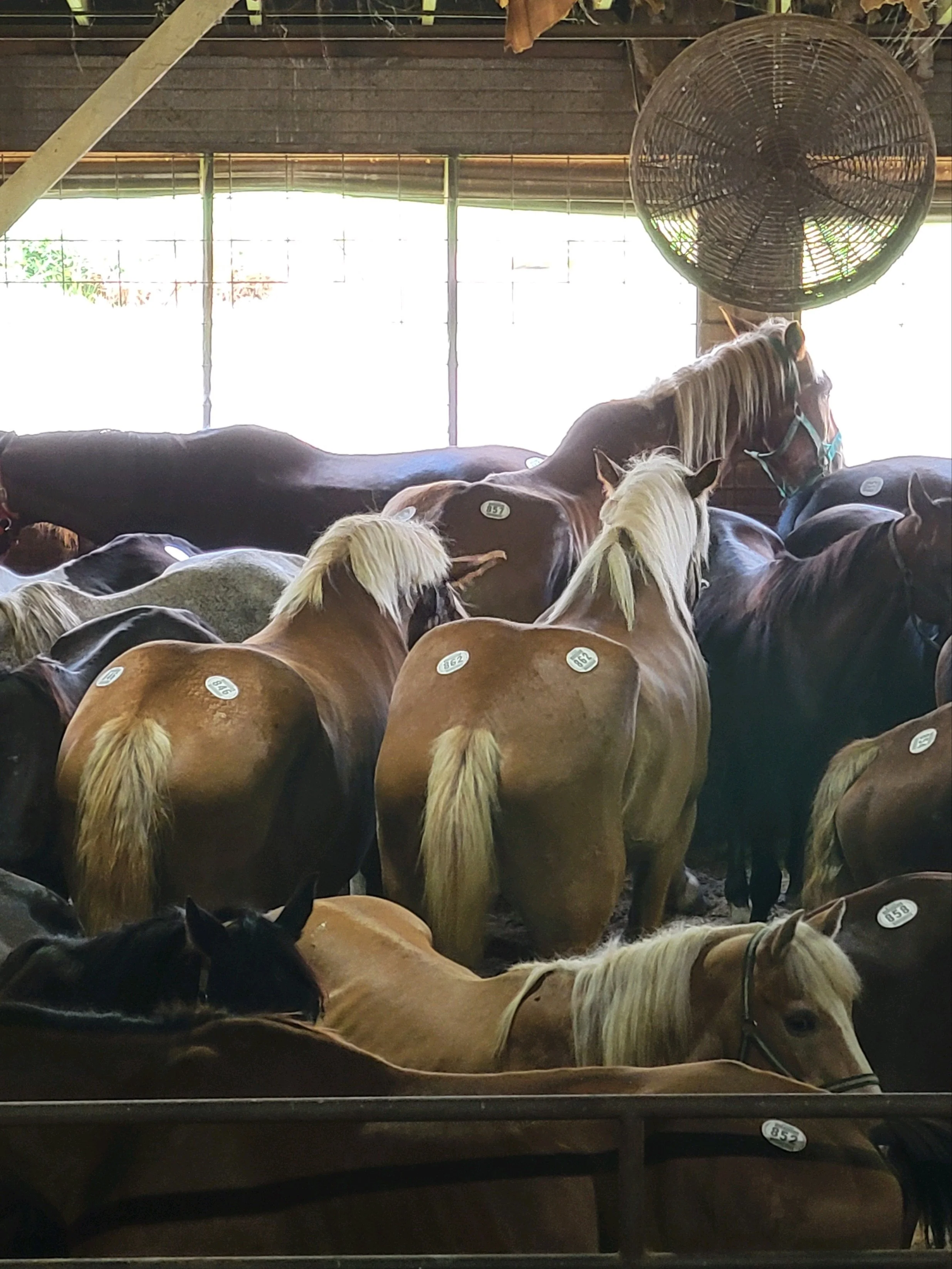
The Reality Today
The Reality Today
Many people are surprised to learn that horse slaughter is not illegal in the United States. While there are currently no horse slaughter facilities operating in the U.S., American horses are still routinely transported across the borders to Canada and Mexico, where they are slaughtered for human consumption.
For years, Congress has included language in annual federal spending bills that prevents the U.S. Department of Agriculture (USDA) from using federal funds to inspect horses before slaughter. Because federal inspection is required for horse meat intended for human consumption, no USDA-inspected horse slaughter plants currently operate in the United States. However, these funding restrictions do not prohibit horse slaughter itself or the export of horses for slaughter. Because this language must be renewed through the federal spending bill each year, there is no permanent guarantee that these protections will remain in place. As a result, thousands of American horses continue to enter the slaughter pipeline each year.
However, over the past decade, horse slaughter has decreased by 86% from ~150,000 in 2014 to ~20,000 in 2024. That being said, slaughter numbers increased for the first time in over 10 years, with nearly 5,000 more horses exported to Canada and Mexico in 2025 compared to the year before. The overall industry picture, however, points to a shrinking market as demonstrated by the closure of major feedlots (like Bouvry Exports in Alberta, CA) and a shrinking network of kill buyers.
Why Does Horse Slaughter Exist?
Horse slaughter exists because there is still a market for horse meat in certain countries. The largest consumer markets are found in parts of Asia, Europe, and South America where horse meat remains part of traditional cuisine or is considered a specialty food. As long as processors can sell horse meat for more than it costs to purchase and transport horses, there is a financial incentive for the industry to continue.
Kill buyers or ‘meat men’, as we like to call them, are the middlemen who purchase horses at livestock auctions to sell them to slaughterhouses. These buyers purchase horses typically based on their weight and the current market value of horse meat rather than their age, training, or potential as riding horses.
Horses that attract little interest from private buyers may still be purchased for the slaughter market. This means that horses who are older, injured, or difficult to rehome can remain at risk if no other buyer or rescue intervenes.
The Slaughter Pipeline
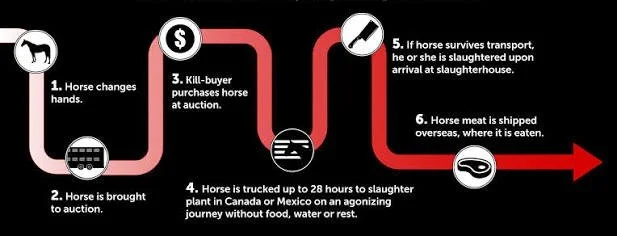
Infographic credit: ASPCA
Why Is Horse Slaughter a Welfare Concern?
Transportation
The journey to slaughter is recognized by equine veterinarians, animal behaviorists, and welfare organizations as a critical animal welfare issue. Unlike most livestock animals, horses have distinct traits that make long-distance commercial transit particularly stressful and hazardous.
Severe Physical Strain: Restricted head movement during 24+ hour trips prevents respiratory clearing, causing pneumonia. Lack of hay and water also leads to severe dehydration, gastric ulcers, and fatal colic.
Extreme Stress & Trauma: As prey animals, confinement triggers fear. When crammed into crowded trailers, horses may bite, kick, and trample others with no room to escape.
Injury & Inappropriate Vehicles: Horses often travel in double-deck trailers built for cattle. The low ceilings cause head injuries, while sharp turns cause falls. Once down in a moving trailer, a horse is rarely able to stand back up.
Pre-Existing Vulnerability: Many horses destined for slaughter are already aged, injured, or sick, making the physical strain of transport far more painful.
Drug Residues & Food Safety
Unlike cattle or pigs raised specifically for food production, most American horses spend their lives as companions, athletes, working animals, or breeding stock. They are not raised under food animal regulations and often receive medications that are prohibited in animals intended for human food supply. For example, phenylbutazone (“bute”) is a anti-inflammatory drug widely used in equine medicine to relieve pain and reduce inflammation. Because it has been linked to severe human side effects, it is strictly prohibited in animals destined for the food chain.
Method of Slaughter
The cruelty associated with horse slaughter stems from the challenges of applying traditional livestock slaughter systems to an animal with very different biological and behavioral characteristics. Slaughterhouse infrastructure is primarily designed for slower-moving, domesticated livestock, while horses are highly reactive prey animals with a strong flight response and unique anatomy. Because of these differences, handling and stunning horses can present significant difficulties. When procedures are not performed effectively, failures in stunning and other aspects of the slaughter process can result in severe distress and injury.
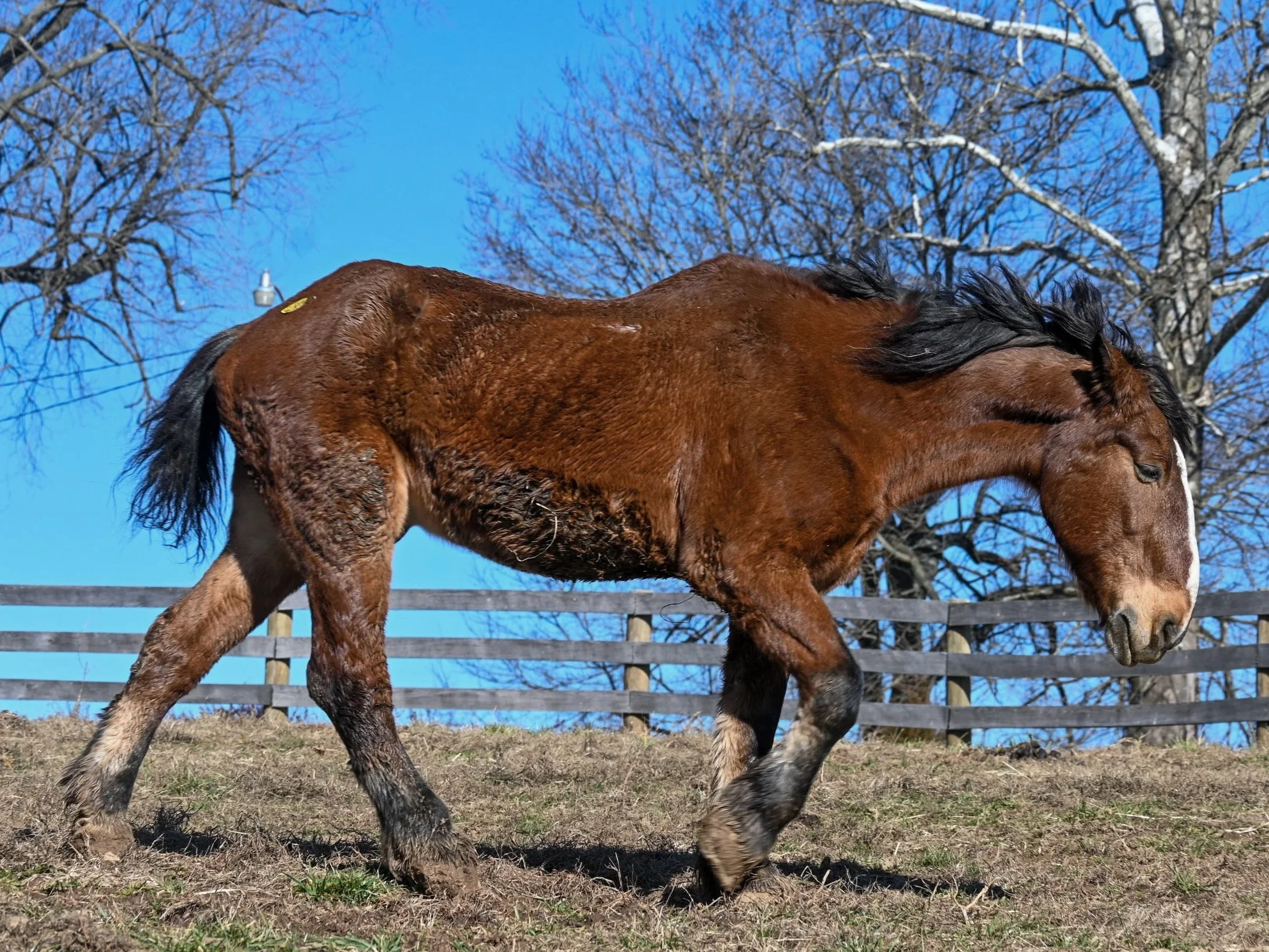
Squeak was rescued at a livestock auction in December 2024. When he was rescued, he was incredibly thin and had a host of skin and dental issues.
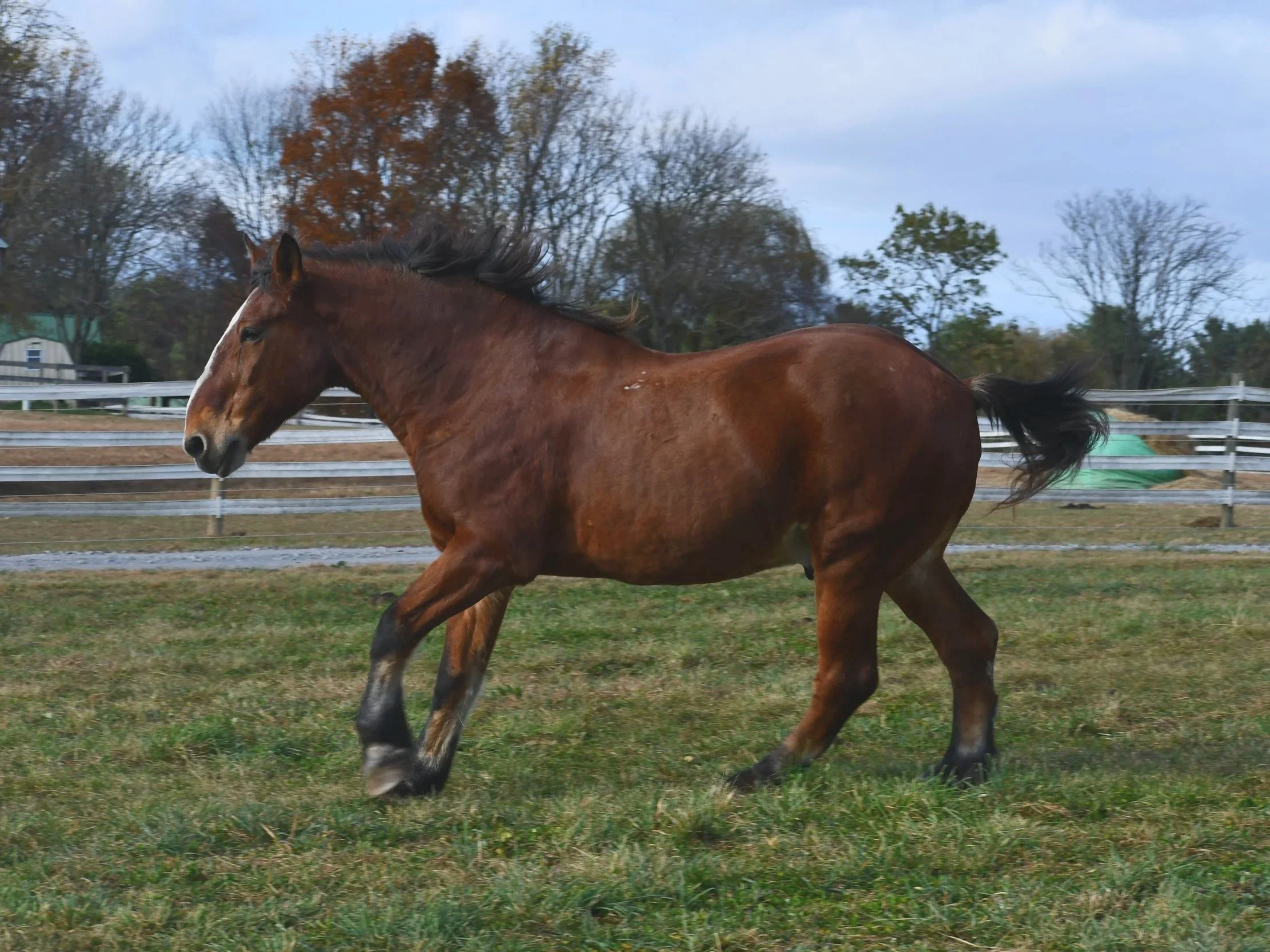
Squeak was adopted just four months after! We are so happy he found a new family to provide him everything he needs and deserves.
Federal Legislation
The Save America’s Forgotten Equines (SAFE) Act is federal legislation that would provide permanent protection for horses by prohibiting the slaughter of equines for human consumption and banning the transportation of horses across U.S. borders for the purpose of slaughter.
The SAFE Act has received bipartisan support in Congress. The current House version, H.R. 1661, was introduced on February 27, 2025, by Representatives Vern Buchanan (R-FL) and Jan Schakowsky (D-IL). The bill has gained support from members of both parties and currently has more than half of the House as cosponsors. A companion bill, S. 771, was introduced in the Senate by Senators Lindsey Graham (R-SC) and Ben Ray Luján (D-NM) in February.
Although the SAFE Act has not yet passed, continued bipartisan support demonstrates growing recognition that horses and other equines deserve permanent protection. Until federal legislation is enacted, rescues, advocates, and responsible horse owners continue working to provide alternatives and keep horses out of the slaughter pipeline.
State Laws
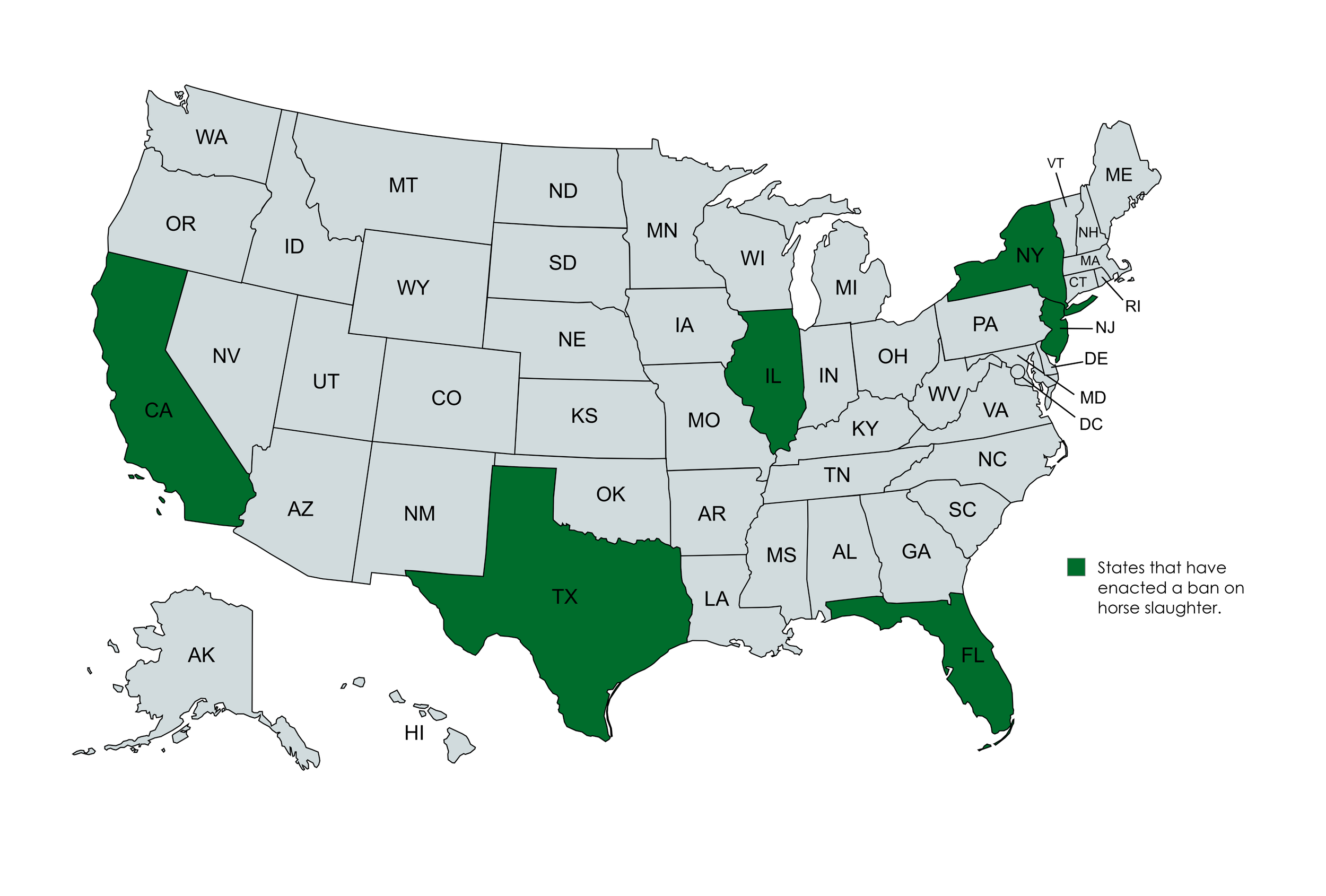
In the United States, state laws on horse slaughter form a patchwork quilt. While federal funding restrictions exist, actual state-level bans exist in only a handful of states: California, Texas, Illinois, New Jersey, New York, and Florida. These states prohibit slaughtering horses for human consumption, and some ban the sale, transport, or export of horses intended for slaughter to close transport loopholes.
In contrast, most states do not explicitly outlaw horse slaughter under their own statutes. In those jurisdictions, processing equines remains technically legal at the state level. In other words, if federal inspection funding were ever restored, slaughterhouses could legally open there. As a result, tens of thousands of American horses continue to be purchased in states without strict export bans and trucked across federal borders to slaughterhouses in Canada and Mexico.
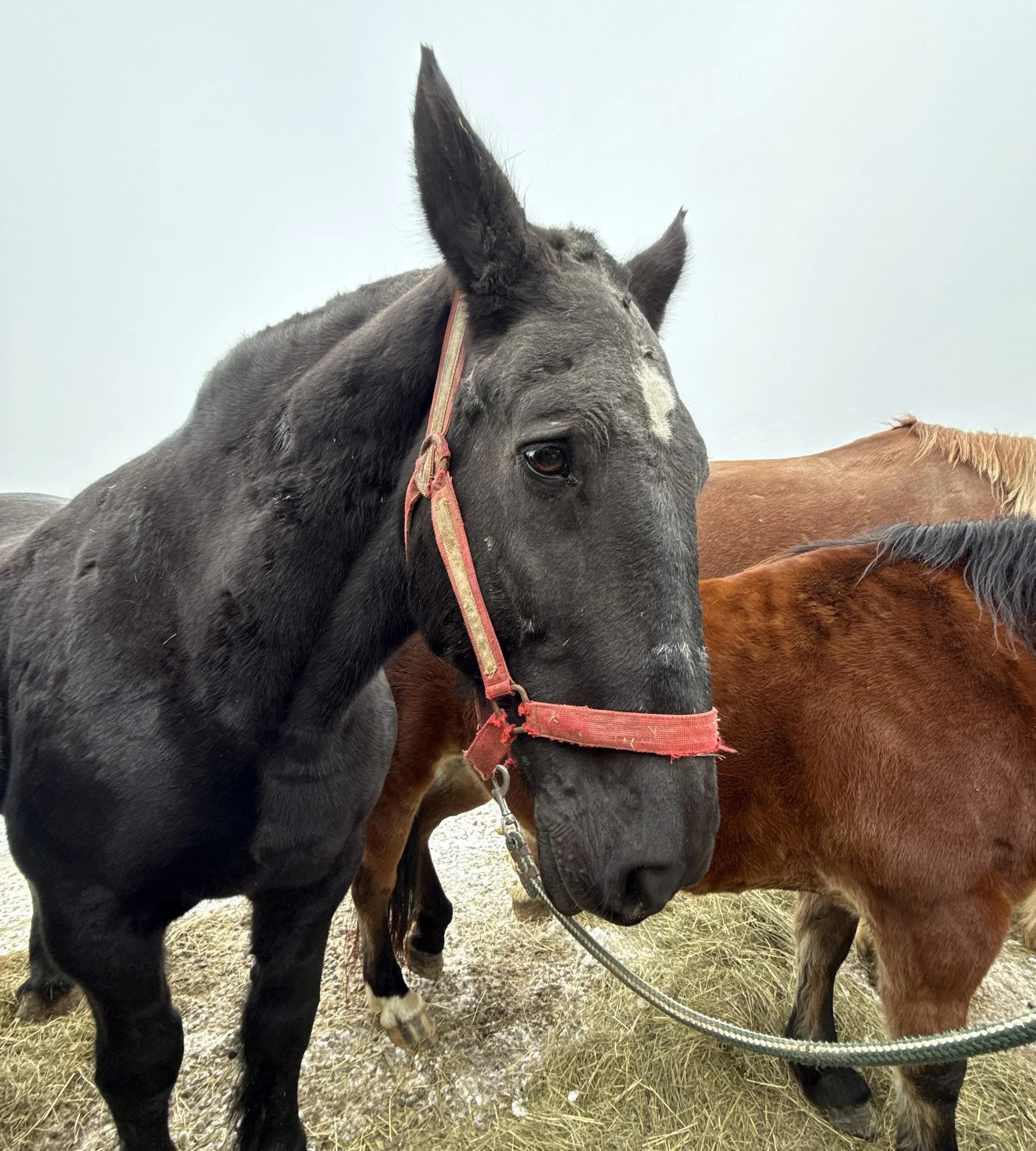
Maeve was rescued at a livestock auction on New Year’s Day 2026.
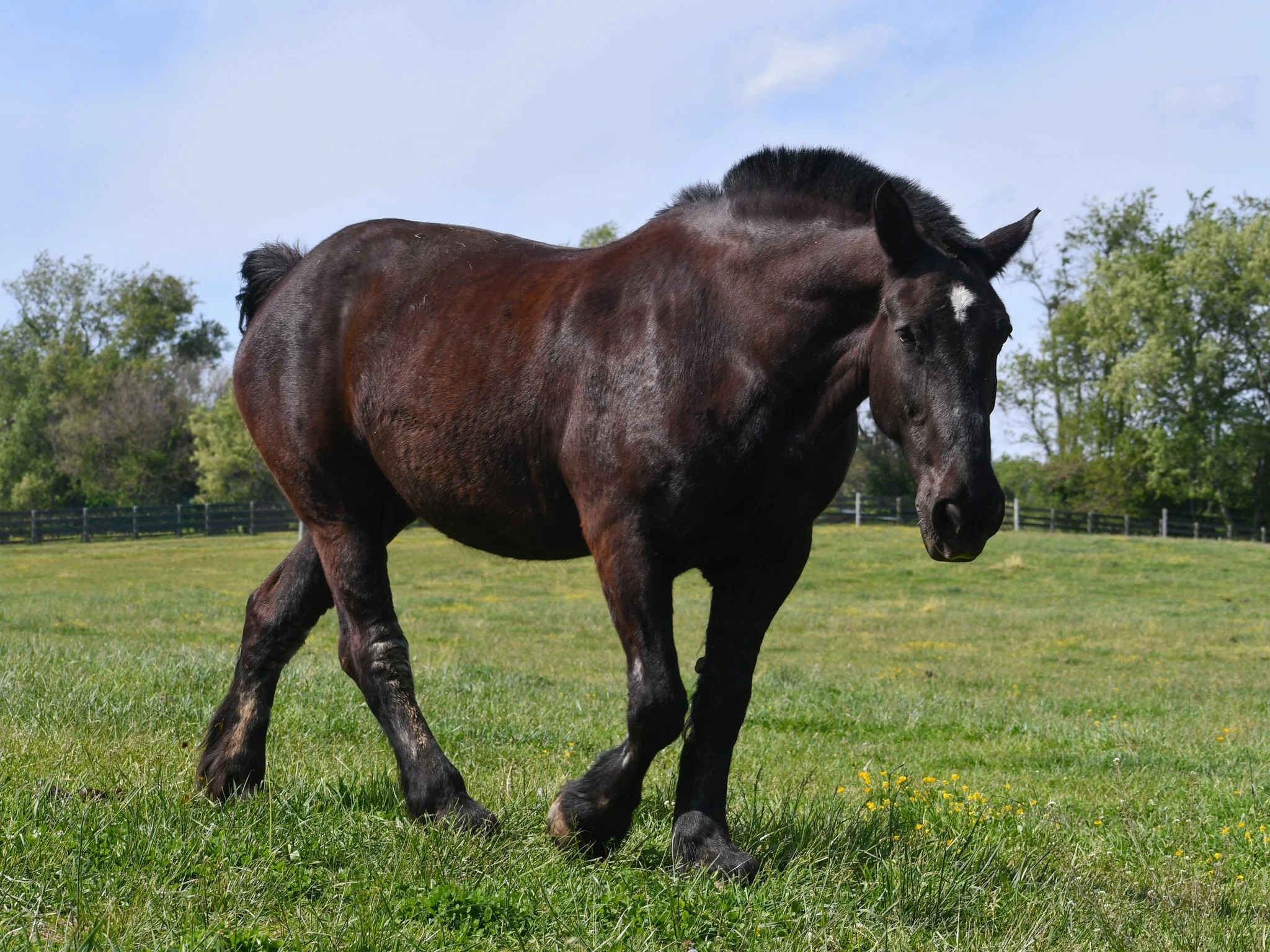
Maeve five months after her rescue! She is strong, healthy, and ready to find someone to love and cherish her for the rest of her days.
Global Outlook
The European Union
One of the most significant developments occurred in 2025, when the European Union ended imports of horse meat from Canada, its largest supplier for human consumption. The decision followed years of concerns surrounding drug residues, inadequate lifetime traceability of horses, and animal welfare.
Mexico
Evidence suggests that recent increases in horses exported from the United States to Mexico are being driven more by domestic Mexican demand than by growing global consumption.
Italy
Historically one of Europe's largest consumers of horse meat, Italy has introduced legislation that would prohibit both the slaughter of horses and the consumption of horse meat. While these proposals have not yet become law, they reflect a shift in public opinion toward recognizing horses as companion and working animals rather than livestock raised for food.
All together, these trends suggest that the horse slaughter industry is shrinking globally, even as regional markets (like Japan) continue to sustain it. Although exports from the United States increased in 2025 after years of decline, the future points toward decreasing demand and stronger expectations for animal welfare and food safety.
What Does Gentle Giants Do About It?
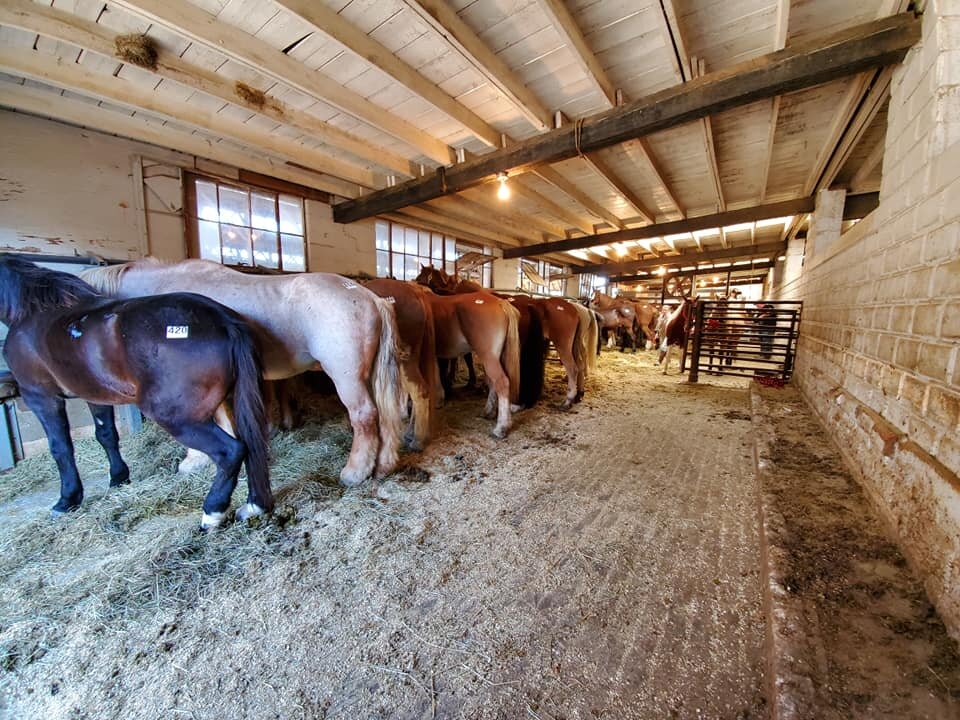
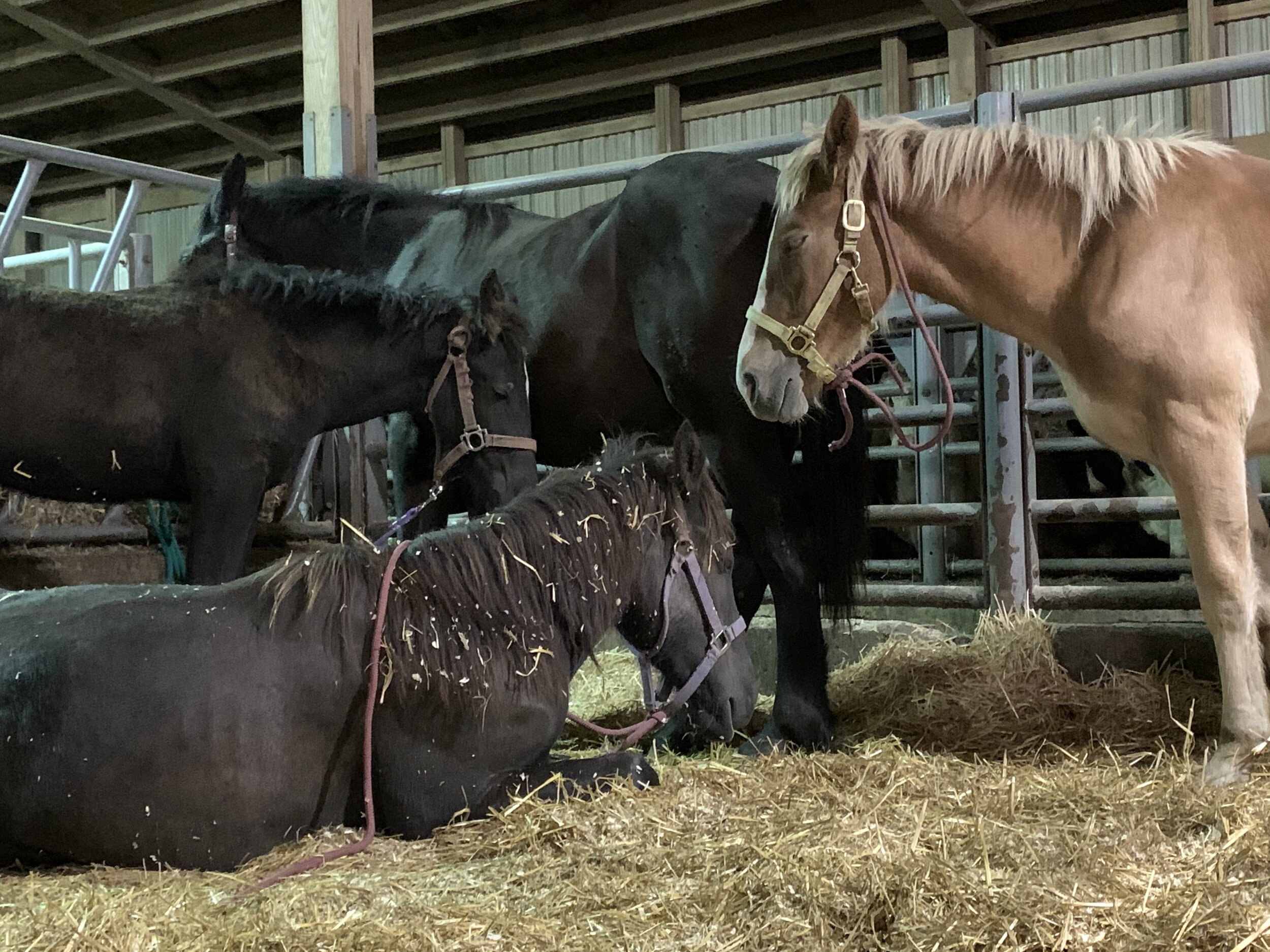
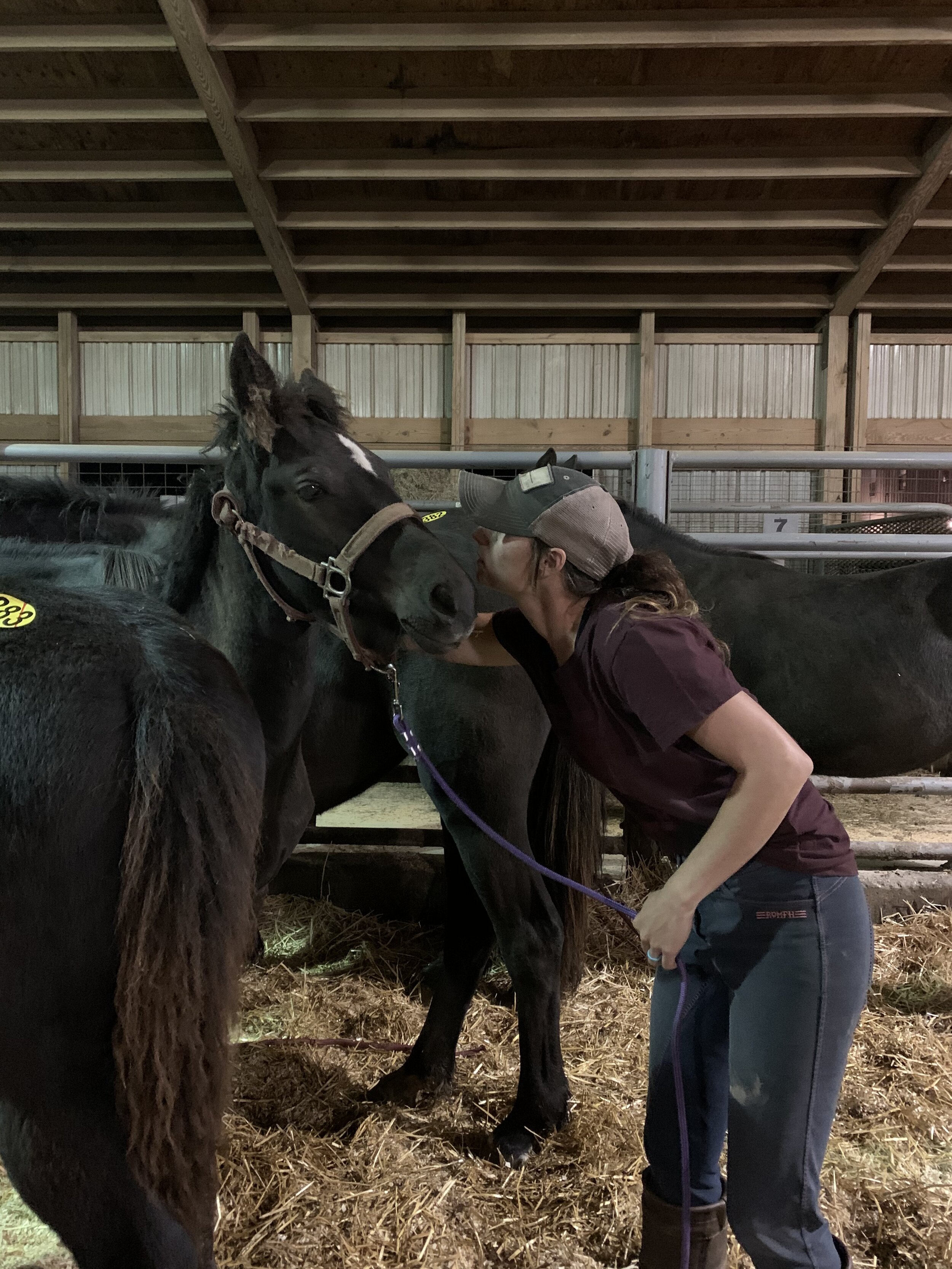
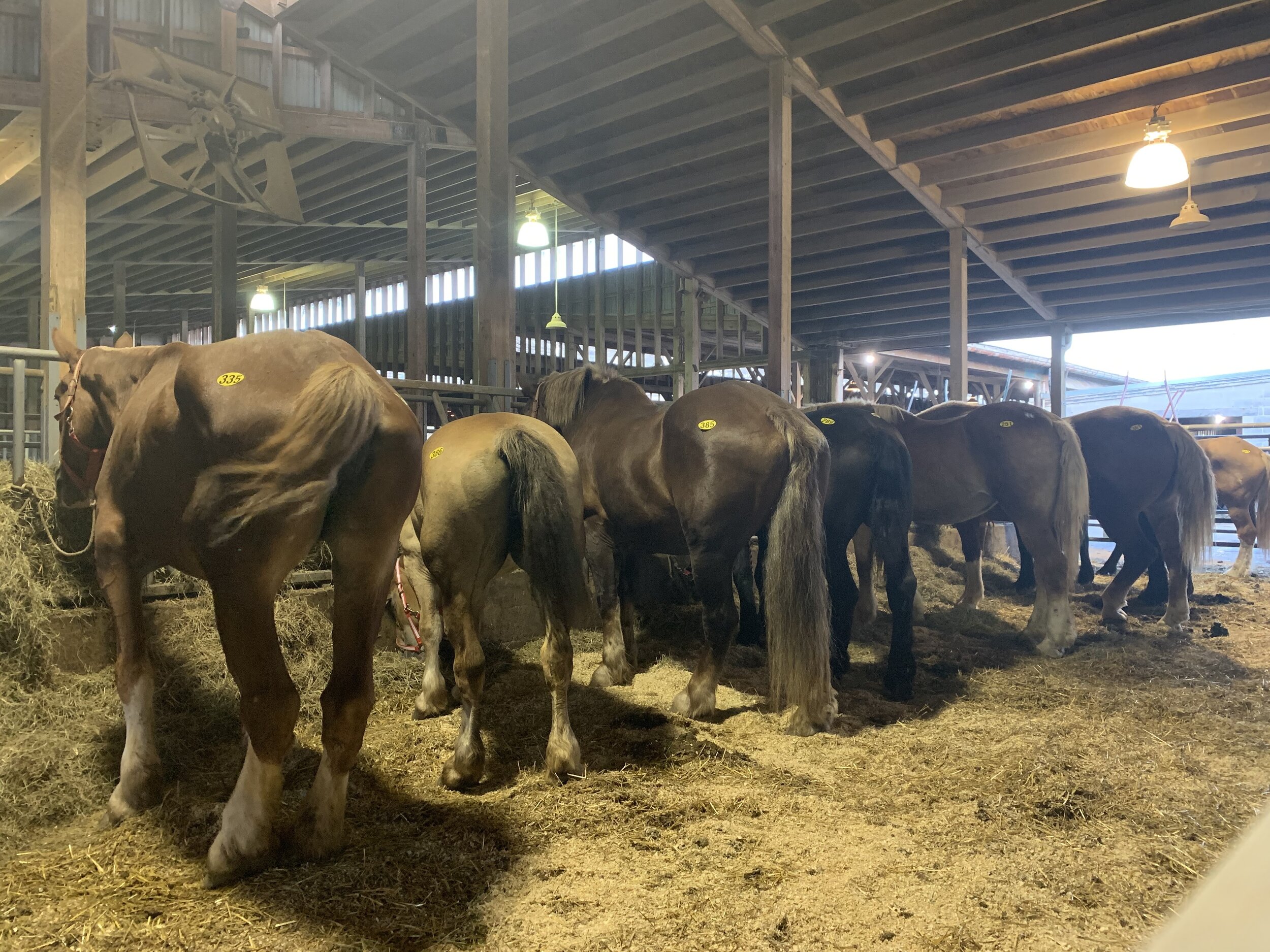
We go head first into the East Coast horse auctions frequented by meat buyers, and we outbid the "meat men". We believe this is the best way to stop the flow of profits into the slaughter system as our donor’s money goes directly to purchasing the horse and no money goes into the hands of a meat buyer or horse broker. Gentle Giants is conscientious to only bid on horses who are targeted by the meat buyers. Very few people are aware that many privately owned horses sold at auction are in grave danger of being purchased for slaughter.
Life circumstances can also change unexpectedly, making it difficult for even the most devoted owners to continue caring for their horses. Our Owner Surrender Program offers a judgment-free, humane alternative by providing draft horses and draft crosses with care, rehabilitation, and the opportunity for adoption or lifelong sanctuary. By supporting owners before they reach a crisis point, we help prevent horses from becoming vulnerable to abandonment or the slaughter pipeline.
How You Can Help
How You Can Help
Contact your Congressional Representatives today!
The Save America’s Forgotten Equines (SAFE) Act is federal legislation that would provide permanent protection for horses by prohibiting the slaughter of equines for human consumption and banning the transportation of horses across U.S. borders for the purpose of slaughter. The current House version, H.R. 1661, has gained support from members of both parties and currently more than half of House members are cosponsors.
You can contact your Congressional Representatives office by phone and write them a letter stating clear reasons that you don't support our US horses being slaughtered for human consumption. Click on “View Sample Letter Below,” but feel free to personalize! If you have an experience with a special horse, let your Representatives know! The most successful letters are concise, factual, and professional.
-
Dear ____________________,
As your constituent, I am writing to ask that you cosponsor and support the Save America’s Forgotten Equines (SAFE) Act (H.R.1661). I have no monetary interest in this matter, I am simply asking you to do the right thing.
This Act bans the slaughter of equines for human consumption and prohibits the sale or transport of equines for human consumption. If you already advocate the passage of H.R.1661, I thank you. If not, I ask you to consider why so many Americans oppose horse slaughter. Americans don't eat horses. Horses are our companions in sport, recreation, work, and entertainment; and are a living symbol of the pioneer spirit. Horses are not bred as a food animal, and thus are not raised in or under FDA rules for "food animals." Slaughter is not a humane death, and is not equivalent to euthanasia. The methods used to slaughter horses were designed for cattle and smaller animals, and are not effective nor humane for any equine. Captive Bolt pistols meant to render the horse unconscious rarely do so on the first strike, and horses must endure being struck multiple times in the face or head with a 4 inch bolt. Often horses are not rendered fully unconscious, and are slaughtered while still aware. History has shown that the horse slaughterhouses that had previously operated in the US were a drain to their community; creating multiple environmental problems, a decrease in home and land values, and a large social stigma about the community. Proponents cite that horse slaughter "saves" surplus horses from neglect, abandonment, and starvation. In fact, neglect, abandonment, and starvation are illegal. Offenders should be criminally charged, and not allowed to profit from their crimes. Additionally, an increase of slaughtered US horses has not reduced known causes of neglect and starvation in the past. Animal cruelty should never substitute for responsible animal stewardship. Excess horses are human created, resulting from over breeding in industries such as Premarin production (Hormone Replacement Therapy drugs made from pregnant mares urine), the horse racing industry, the show horse industry, riding stables, etc. Regulators ought to focus on reducing irresponsible breeding and humane choices for unwanted horses. Please support the passage of H.R.1661 the Save America’s Forgotten Horses (SAFE) Act. Please vote to stop our American horses from being slaughtered.
Thank you, __________________
Support our mission by donating, volunteering, adopting, or sponsoring a horse!
Horse ownership comes with a great deal of responsibility. One of the greatest responsibilities is establishing an end of life plan for your horse(s) and preparing for the difficult decision of rehoming or surrendering your horse(s) if you are no longer able to provide care for them.
Before making the decision to send your horse to an auction where their fate may be in the hands of the meat men, we strongly encourage horse owners to seek placement for their horse, either through a private home or a rescue. For horses with chronic ailments or other issues that are seriously impacting their quality of life, please consider humane euthanasia at home. Our horses give us their all, it’s our responsibility to take care of them and return their loyal service with a plan that is in their best interest.
Share educational resources.
Awareness is one of the most powerful tools in preventing horse slaughter. By sharing accurate, evidence-based information with friends, family, and your community, you can help debunk common misconceptions, encourage responsible horse ownership, and inspire others to support humane alternatives. Every conversation helps build public understanding and support for protecting America's horses.
Report neglect when appropriate.
Neglect and abandonment can place horses at greater risk of entering the slaughter pipeline. If you witness a horse that appears to be neglected, abused, or without adequate food, water, shelter, or veterinary care, report your concerns to your local animal control agency, humane society, or law enforcement. Early intervention can provide owners with needed resources, protect horses from further suffering, and, in some cases, prevent them from becoming vulnerable to the slaughter pipeline.
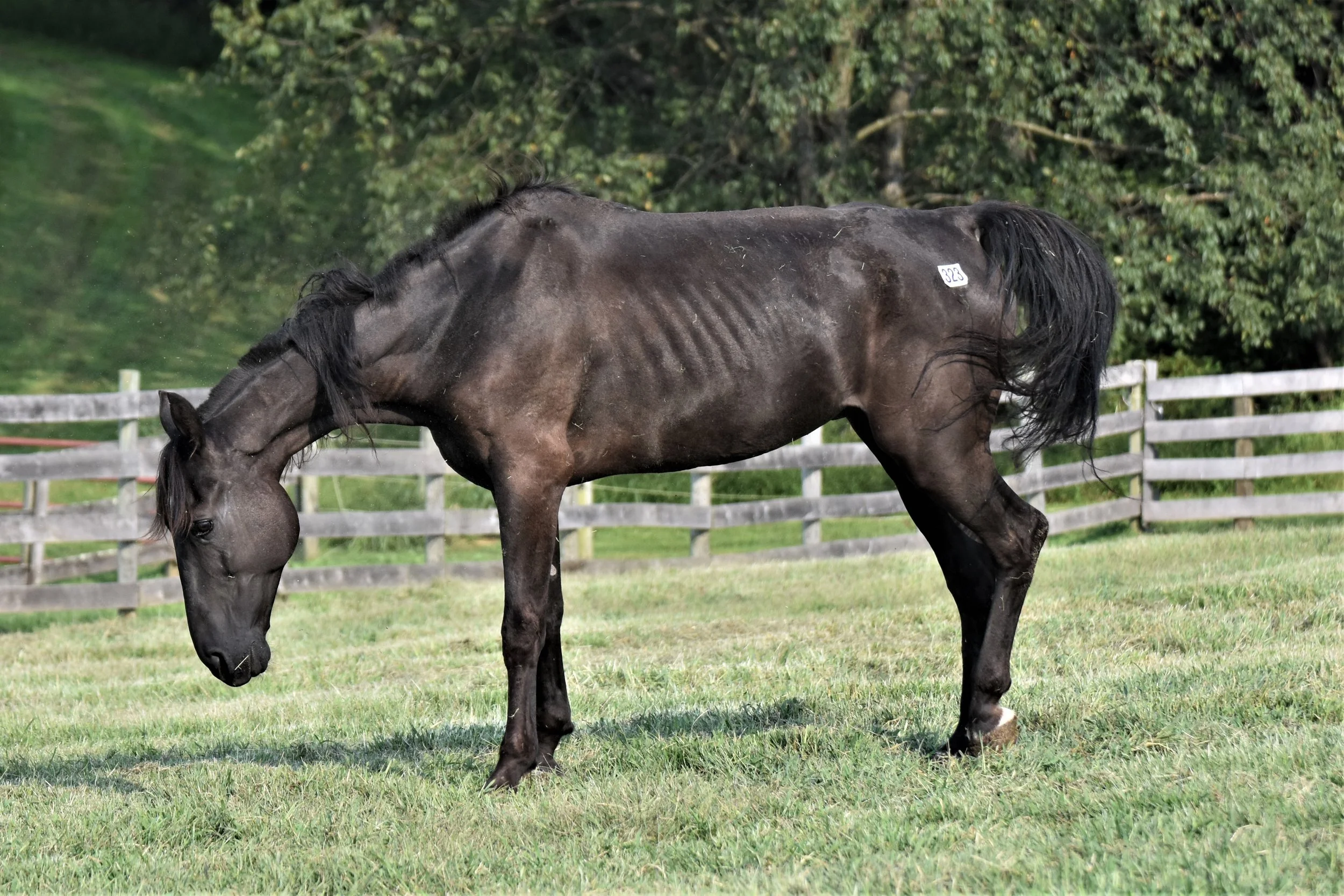
We found Professor in November 2022 at an auction, starved and worked nearly to death.
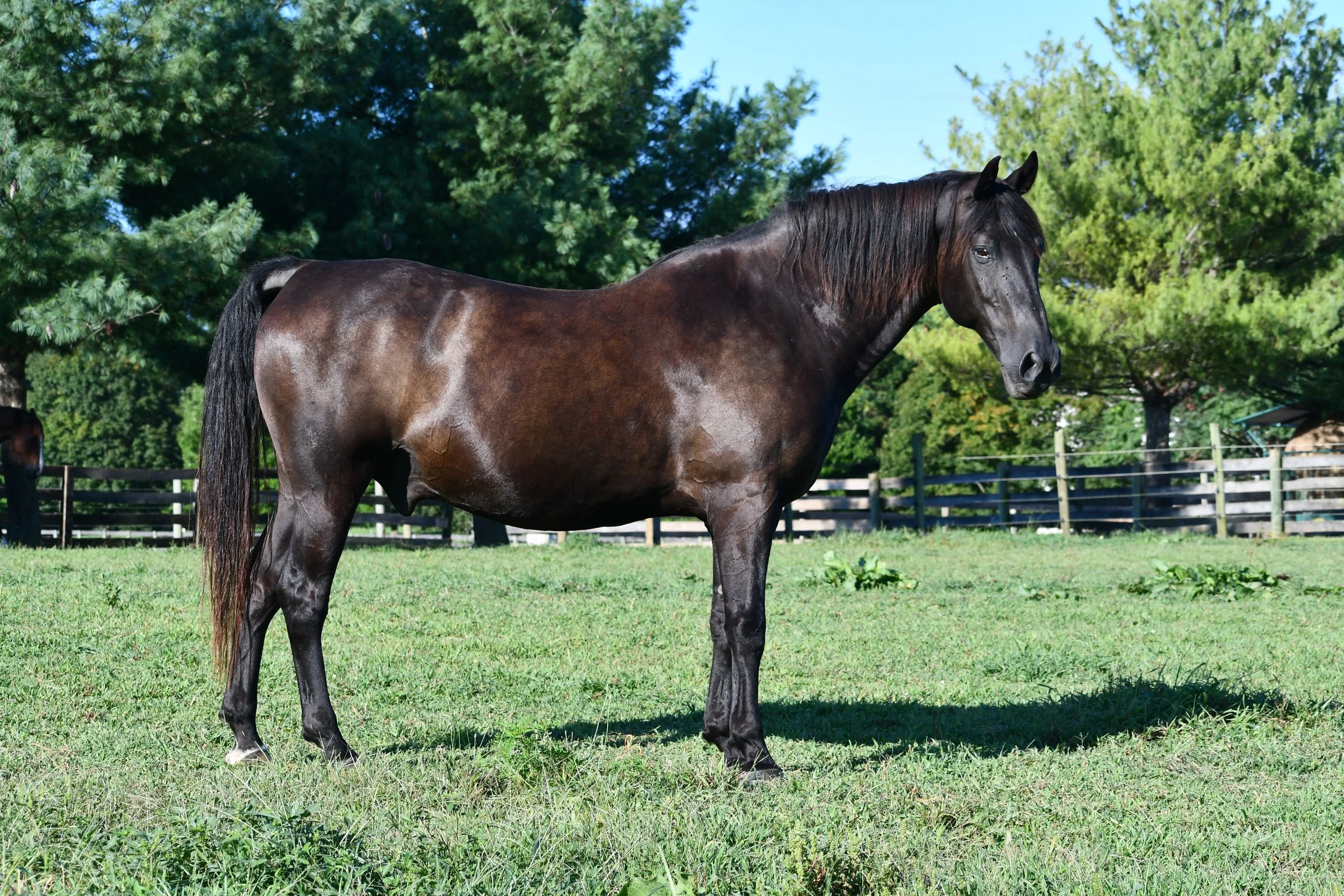
After a personalized refeeding program and much needed farrier care, Professor regained his energy, the sparkle in his eye, and is a much different horse today! He is still looking for his forever home.
FAQs
Why Should We Care?
Many people believe that it would be more humane to have horses slaughtered in the US than outside of the country because the USDA would better monitor the process. However, horse slaughter is never humane, even in the best of circumstances, and we don't want to see it anywhere. Here's a news story from Canada, where current methods mirror those historically used in the US. It would be naive to believe that the same errors and mismanagement could not also occur in US plants. Expert Temple Grandin speaks about why this method is absolutely unacceptable and inhumane. This video is not overly graphic, so do not be afraid to watch.
These are our nation’s horses, majestic animals that have played an enormous part in building this country. Horses are purchased by meat buyers who lurk through public livestock auctions picking up any horse that will make them a profit with the Canadian, Mexican, and Japanese slaughterhouses. At these auctions, we see a child’s first pony, tired plow horses, broken racehorses, horses who carried visitors on their first trail ride, and the backyard, loving companions, all rewarded after a lifetime of service and companionship with a terrifying, gruesome, and painful death.
Does Banning Slaughter Solve the Problem?
No. A ban on horse slaughter is an important step, but it does not address the underlying reasons horses become at risk in the first place. Financial hardship, rising costs of horse ownership, inadequate access to veterinary care, and a shortage of affordable rehoming options all contribute to the problem. Lasting solutions require a combination of responsible ownership, education, expanded rescue capacity, and strong support systems for horse owners in need.
Why can’t unwanted horses simply be euthanized?
Humane euthanasia performed by a licensed veterinarian is a compassionate end-of-life option for horses that are suffering from untreatable illness or injury, or whose quality of life has significantly declined. However, it can be expensive, and owners must also arrange for proper carcass disposal, which adds additional cost. For some owners facing financial hardship, these expenses can be difficult to afford, leaving them with limited options. Increasing access to affordable euthanasia and owner assistance programs can help ensure horses do not enter the slaughter pipeline simply because their owners lack the resources to provide a humane end of life.
Why don’t horses just go to rescues?
Horse rescues play an essential role, but they cannot meet the demand alone. Caring for horses requires significant resources, including land, feed, veterinary care, farrier services, staff, and funding. Most rescues operate at or near capacity and must carefully manage admissions to ensure every horse receives appropriate care. Expanding rescue capacity, supporting owner surrender programs, and helping owners before they reach a crisis point are all essential to reducing the number of horses at risk.
Additional Resources
Legislation
Congress.gov – Track the current status of the SAFE Act.
Find Your Congressmember – Contact your elected representative about horse protection legislation.
Government Agencies
U.S. Department of Agriculture (USDA) – Information on animal welfare and federal regulations.
Industry Data & Research
Horses in Our Hands – Export statistics, market trends, and research on the horse slaughter industry.
Horse Welfare Organizations
ASPCA – Horse welfare resources and advocacy.
Humane World for Animals – Information on horse slaughter, equine welfare, and legislative efforts.
Please note: These resources are provided for educational purposes. While Gentle Giants Draft Horse Rescue may not endorse every position or initiative of these organizations, they offer valuable information to help visitors better understand horse slaughter, equine welfare, and related legislation.
This page was last updated July 2026.